although I wasn't born during those Oro Plata Mata days,.. the echo of that not so long ago nostalgic past still holds relevenace to our lives today,..... after all History has been proven cyclic, and with leaps and bound, experienced by our province today, especially with the ongoing ethanol project, which in effect would probably raise back the sugar industry back to its former glory. That Bygone era is sure to return,.. but of course, it is important to remember, that we have been taught a lesson, and it is important to always remember it...
Do you recall the time when...
Bacolod was so small that we practically knew everyone in town? That time when sugar was booming and Negrenses were "roaring"?
Mga "mayayabang" ang mga taga-Negros, hambal sang mga Tagalog as evidenced by our infamous "fly-to-Manila-party-all-night-return-to Bacolod-the next-day" capers. If you think that was enough cause to create a riot, just imagine what sort of a ruckus it was when one Bacoleno took a plane trip home to Bacolod bringing along his new Harley-Davidson motorcycle as checked-in baggage. Rather than ship the bike via Negros Navigation, our friend bought up all the equivalent plane seats which would allow him to check in the Harley as an overnight bag.
The sport of that day if you can still recall was pelota. Did you know that there were more private pelota courts in Negros than all the private and public pelota courts in Metro Manila combined?
You're beginning to get the picture aren't you? In the heydays of sugar, just a little bit before the not a very nice person/traitor/crony Ambassador sold us out to the Ilocano dictator, a Piper Cub was only P120,000 and d**n there were a whole lot of Piper Cubs sitting at the Bacolod Aero Club with their owners constantly revelling over Fundador.
And nary was there a vessel of Negros Navigation which sailed from the port of Manila without a gleaming, brand new Mercedes-Benz on its deck raring to hit Bacolod's streets.
If you recall this time...
it was a time when "idyllic" was not enough of an adjective to describe the way we lived in Bacolod.
We were still kids then. In La Salle, in St. Scho. Yet, no matter where we were schooled, every single one of us were bound together by that unfathomable zest for life that makes us the people we are...Bacoleños! Real Bacoleños at that.
THIS IS WHAT THE LA SALLE AVENUE ONLINE IS ALL ABOUT!
If you can picture that time in your mind, you will come to the realization that though you may have left Bacolod a long, long time ago, BACOLOD HAS NEVER REALLY LEFT YOUR HEART. And today through the aid of modern technology and digital media, we bring you back to where your heart is...BACOLOD. And more than just Bacolod, we take you back to the place of fond memories...LA SALLE AVENUE as we knew it then!
You are here...LA SALLE AVENUE ONLINE
WELCOME HOME!
Monday, March 19, 2007

Sunday, March 18, 2007
New SM mall opens in bacolod


SM City Bacolod Opens
By , 27 Feb 2007
Source: Manila Times
The western Visayas region will have its own version of the iconic Mall of Asia when SM City Bacolod opens its door to the public on Friday March 2. It is SM Prime Holdings'28th supermall, and will serve customers in this dynamic hub of trade, education and government services in Negros Occidental.
Located on 16 -hectare property across Rizal Street, the 60,000 sq.m mall will bring SM''s shopping leisure to Bacolod City, as well as Negros Occidental and nearby provinces. Like the Mall of Asia, which has a spectacular view of scenic Manila bay, SM City Bacolod is located in the harbor of Guimaras Strait. This will give mall goers the added attraction of fresh air and breath taking view of this busy waterway.
This single-level retail and entertainment center consist of two separate buildings connected by a bridgeway, Buildings A includes SM Supermarket, selected anchor stores, other retail stores, four cinemas and outdoor dining facilities. Building B, on the other, has the SM Department Store as its major anchor, and includes the SM foodcourt, the entertainment area, stores and restaurants, and outdoor dining areas.
SM City Bacolod is a mall of many new concepts; a bridgeway highlights the architectural structure, unifying design of two buildings, making it the first of its kind among SM Malls. It welcome customers with a six-sided grand facade with 10 SM signages all around.
The mall's interiors are equally compelling- high ceiling and colorful murals inspired by Bacolod's world famous Maskara Festival and designed by director Fritz Infante.
SM Bacolod will have about 200 tenants, including SM anchors, fashion boutiques, show and home stores, and computer stores. Apart from the foodcourt, it also has local and international fast food chains, food retailers and specialty restaurant. It will have major international and Manila based brands, as well as homegrown retailers and restaurants.
Some of the mall's attraction include an al fresco dining area call the Fiesta Strip on both sides of Rizal Street, an event center for premiere events, and a theater that can be converted as a venue for concerts, plays, product launches, conventions.
For customer convenience, SM City Bacolod has ample parking for 1,000 cars and 300 motorcycles. It also has two transport terminals, as well as a Travelers Lounge with a ferry ticket counter, waiting area, baggage counter, and hot and cold shower.
The mall is also handicapped friendly with ramps, railings, and elevators as wells as breastfeeding friendly with a room for nursing mothers.
Environmentally concerned like other SM Malls. It also has sewage treatment plant that recycles water, and is the only mall in Bacolod, which utilizes waterless urinals in all its male restrooms.
SM City Bacolod's design team includes Design associates, Design Architect, WV Coscolluela and Associates, Architect of Record; DA Abcede and Associates, Project Manager, and Monolith Construction and Development Corporation.
Bacolod City


the Cleanest and Greenest and the Most Livable City in the Philippines. The capital of the Province of Negros Occidental which is the Sugarbowl of the Philippines. Bacolod City serves as the entrance of the sugar-rich cities and towns of the Province. Visitor's facilities abound, modern means of in-land transport can take guests for business or leisure to any point in the island of Negros.
Bacolod will charm you with the genuine warmth and hospitality of her people in harmony with their lilting melodious accent. The Bacolenos will delight you with food and cuisine that is as vigorous yet as subtle as the legendary Ilonggo gentility and taste for the good life.

Profile
Bacolod is a major seaport and has daily ferry trips to Iloilo City. By boat, Bacolod is 20 hours from Manila and 7 hours from Cebu City. Bacolod City Domestic Airport is 4 kilometers away from the city's downtown area. Bacolod is 45 minutes from Manila by plane and 30 minutes from Cebu City by plane.
Bacolod is ideally located on a level area, slightly sloping as it extends toward the sea with an average slope of 0.9 percent for the city proper and between 3 to 5 percent for the suburbs. The altitude is 32.8 feet or 10.0 meters above sea level with the Bacolod City Public Plaza as the benchmark. Bacolod has two pronounced seasons, wet and dry. The rainy season starts from May to January of the following year with heavy rains occurring during the months of August and September. Dry season starts from the month of February until the last week of April.
The city serves as the gateway to the sugar-rich cities and towns of the province. Visitors' facilities abound; modern means of in-land transport can take guests for business or leisure to any point in Negros Island.
Bacolod City is home to the Panaad Stadium, which has a seating capacity of 15,500, but holds around 20,000 people with standing areas. Equipped with an Olympic-size swimming pool, a rubberized oval field and a "Eucalyptic atmosphere" because it is shaded by a forest of Eucalyptus trees, it became the host venue of several National and International events in the country. Beside the Panaad Stadium is the Panaad Park, home of "Panaad sa Negros" - a festival held annually from late April until early May (or after Holy Week). The Panaad Park is a recreational mini forest park that showcases the life, culture, trade, tourism, and cuisine of the Negrense.
Along its highways, sugarcane plantations are a typical scene; coconut and rice are also grown. The people are engaged in livestock, fishing and pottery.
Most of the residents of Bacolod speak Hiligaynon, which is also referred to as Ilonggo after the neighboring province of Iloilo, where many of the ancestors of the present-day Negrenses originally came from. The rest generally speak Filipino - the national language, and Cebuano. English is considered a second language. A considerable number of residents of Chinese ancenstry also converse in the Amoy dialect.[citation needed]
History
The city's name was derived from the Hiligaynon word "bakolod" – meaning "stonehill" – since the settlement was founded in 1770 on a stonehill area, now the district of Granada and the former site of the Bacolod Murcia Milling Company.
Due to Muslim raids in 1787, Bacolod was transferred towards the shoreline. The old site was called "Da-an Banwa," meaning "old town".
In 1894, by order of Governor General Claveria, through Negros Island Governor Manuel Valdevieso Morquecho, Bacolod was made the capital of the Province of Negros. Bernardino de los Santos became the first gobernadorcillo and Fray Julian Gonzaga the first parish priest.
The success of the revolution in Bacolod was attributed to the low morale of the local Spanish detachment, due to its defeat in Panay and Luzon and to the psychological warfare waged by Generals Aniceto Lacson and Juan Araneta. In 1897, a battle in Bacolod was fought at Matab-ang River. A year later, on November 5, 1898, the Negrense "Revolucionarios," armed with knives, bolos, spears, and rifle-like "nipa" stems, and pieces of "sawali" or "amakan" mounted on carts, captured the convento where Coronel Isidro de Castro y Cisneros, well-armed "cazadores" and platoons of civil guards, surrendered. Two days later, on the 7th, most of the revolutionary army gathered together to establish a Provisional Junta and to confirm the elections of Aniceto Lacson as president, Juan Araneta as war-delegate, as well as the other officials.
On March 1899, the American forces led by Colonel James G. Smith occupied Bacolod, the revolutionary capital of the Provisional Republic of Negros.
By virtue of Commonwealth Act No. 326, enacted by the National Assembly, Bacolod was made a chartered city on October 19, 1938.
In World War II, Bacolod City was occupied by the Japanese forces on May 21, 1942. It was liberated by the American forces on May 29, 1945
Contemporary events

Bacolod was one of the host cities of the 23rd Southeast Asian Games from November 20 to December 4, 2005. Sports held in the city included boxing, indoor volleyball, beach volleyball, weightlifting, and men's football. It is also the Host Venue for the 2006 Asian Cup Qualifiers and is considered the FootBall City of the Philippines.
The current mayor of Bacolod City is Evelio Leonardia and the vice mayor is Renecito Novero. Rep. Monico Puentebella is also the current representative of the lone district of Bacolod in the Philippine House of Representatives.
Four call centers were established in the city in 2005. These call center facilities are being managed by international companies such as Teleperformance, TeleTech and local call center companies - IO Asia and Focus Pacific with TeleTech as the Major Performer in the race. Convergy's Philippines and other Multinational and Local based call centers also has plans to set up base here in Bacolod dubbed the Next BPO and ICT Hub in the Philippines. A new Government Center is on the Running and Construction phase and is set to be finished in 18 months.
In a recent study by the Asian Institute of Management (AIM), Bacolod City tops the list as the Most Business Friendly Highly Urbanized City and Number 1 in terms of infrastructure, cost of doing business and cost of living, ahead of such other highly urbanized cities like Iloilo, Naga, Cagayan de Oro, and others.[citation needed]
Bacolod City also received an award from ANVIL (a National Award giving body) for its implementation of laws that can speed up processing of business applications and payments of taxes
Inroduction
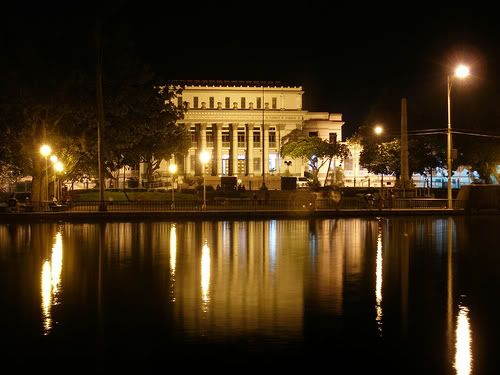 This Blog, won't be about me, well in some ways it will be, after all Bacolod is my city and it is so much a part of me.
I will be focusing on the city's development, it's characterstics, charm and beauty, as well as the nearby places of Silay , Talisay, Bago and Murcia which make up the greater Bacolod area, and form time to time, I'll aslo add a bit of my personal life into the mix...
So ladies and gentlemen,.. this is Bacolod
Subscribe to:
Comments (Atom)